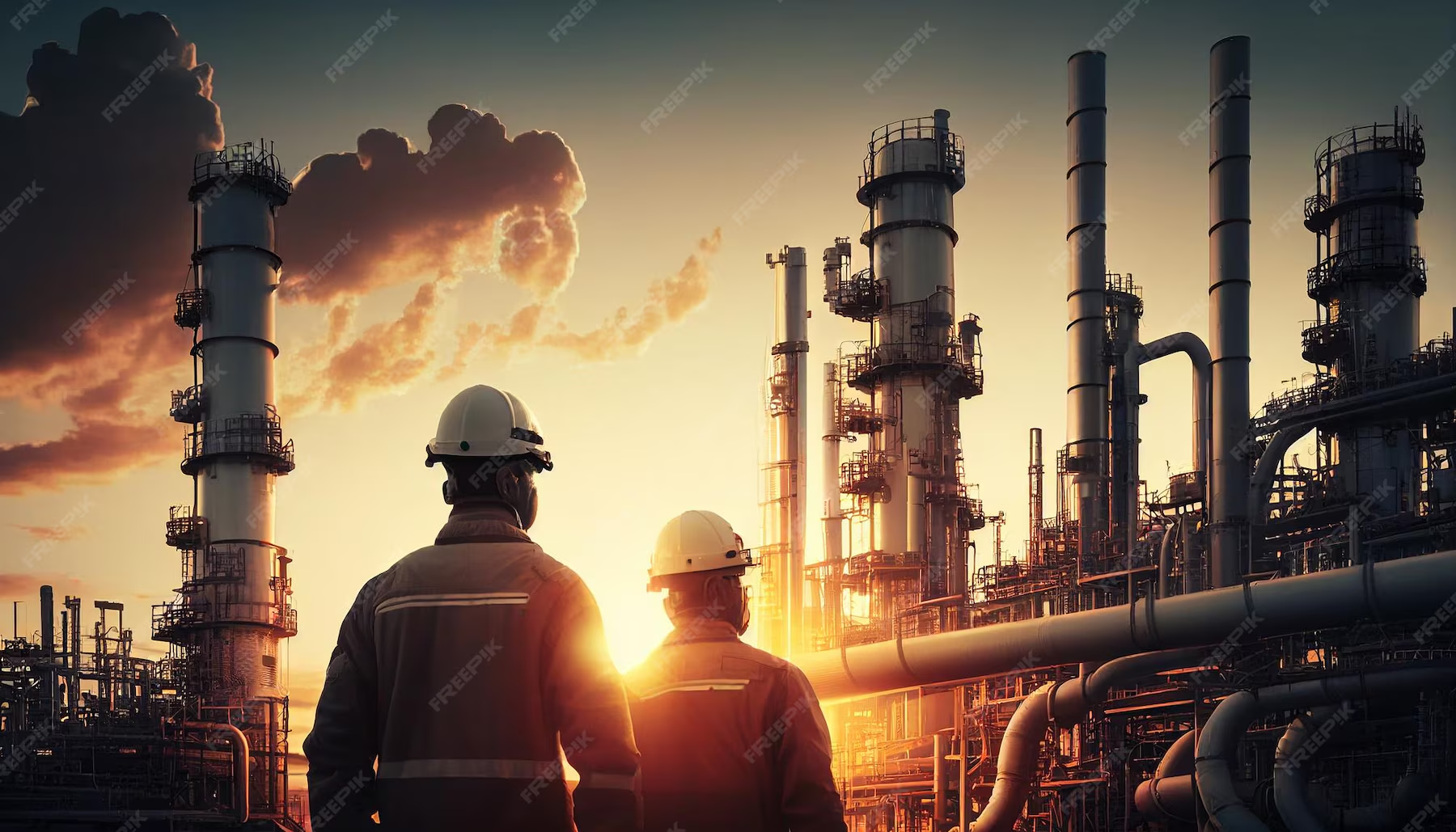
Introduction to the Oil & Gas Industry: Powering Global Economies
The oil and gas industry is one of the most influential sectors in the global economy, providing the primary source of energy that powers transportation, industries, and households. It encompasses the exploration, extraction, refining, transportation, and marketing of petroleum products and natural gas. For decades, oil and gas have been the backbone of industrial development and economic growth across the world.
Oil and gas are the lifeblood of modern economies, fueling everything from vehicles to power generation systems. Without this industry, global infrastructure and daily life would face significant disruptions.
Despite the rise of renewable energy, oil and gas continue to dominate the global energy mix due to their reliability and scalability. The sector remains critical for meeting the world’s growing energy demands while supporting industrial and economic activities.
Structure of the Oil & Gas Industry: Upstream, Midstream, and Downstream
The oil and gas industry is divided into three main segments: upstream, midstream, and downstream. Each segment plays a unique role in the energy value chain, ensuring the efficient production and distribution of resources.
Upstream activities involve exploration and production, including drilling and extraction of crude oil and natural gas. This stage requires advanced technology and significant investment to locate and access reserves.
Midstream focuses on transportation and storage, ensuring that raw materials are safely delivered to refineries and processing plants. Pipelines, tankers, and storage facilities are essential components of this segment.
Downstream activities include refining crude oil into usable products such as gasoline, diesel, and petrochemicals, as well as marketing and distribution. Together, these segments form a comprehensive system that powers global energy supply.
Exploration and Production: The Core of Upstream Operations
Exploration and production are the foundation of the oil and gas industry. This phase involves identifying potential reserves, conducting geological surveys, and drilling wells to extract resources. It is a highly complex and capital-intensive process that requires advanced technology and expertise.
Modern exploration techniques, including seismic imaging and data analytics, have significantly improved the accuracy of resource identification. These technologies reduce risks and enhance efficiency.
Production processes are becoming more advanced, with techniques like hydraulic fracturing and offshore drilling enabling access to previously unreachable reserves. These innovations have expanded the global energy supply.
However, exploration and production also pose environmental and operational challenges, requiring careful management and regulation.
Transportation and Storage: The Role of Midstream Operations
Midstream operations are responsible for transporting and storing crude oil and natural gas from production sites to refineries and distribution centers. This segment ensures the smooth flow of resources across regions and countries.
Pipelines are the most efficient and widely used method for transporting oil and gas over long distances. They provide a reliable and cost-effective solution for energy distribution.
Liquefied natural gas (LNG) transportation has revolutionized the global gas market, enabling international trade and supply flexibility. LNG allows gas to be transported across oceans in specialized tankers.
Storage facilities, including tanks and underground reservoirs, play a crucial role in maintaining supply stability and managing demand fluctuations.
Refining and Distribution: The Downstream Segment
The downstream segment focuses on refining crude oil into usable products and distributing them to consumers. Refineries use complex processes to convert crude oil into fuels, lubricants, and petrochemicals.
Refining transforms raw crude oil into valuable products that power transportation, industries, and households. This process is essential for making energy accessible and usable.
Petrochemicals derived from oil and gas are used in a wide range of products, including plastics, fertilizers, and pharmaceuticals. This highlights the industry’s importance beyond energy production.
Distribution networks, including pipelines, trucks, and retail outlets, ensure that refined products reach consumers efficiently.
Environmental Impact and Sustainability Challenges
The oil and gas industry faces significant environmental challenges due to its impact on ecosystems and climate change. Activities such as drilling, refining, and transportation can lead to pollution and environmental degradation.
Carbon emissions from fossil fuels are a major contributor to global climate change, prompting calls for cleaner energy solutions. Reducing emissions is a key priority for the industry.
Sustainability initiatives, including carbon capture and cleaner technologies, are being adopted to minimize environmental impact. Companies are investing in research and innovation to address these challenges.
The transition to renewable energy is also influencing the industry, pushing it to adapt and evolve in response to environmental concerns.
Challenges Facing the Oil & Gas Industry
The oil and gas sector faces a range of challenges that impact its growth and sustainability. Fluctuating oil prices, geopolitical tensions, and regulatory changes create uncertainty in the market.
Price volatility is one of the biggest challenges, affecting investment decisions and profitability. Global supply and demand dynamics play a significant role in price fluctuations.
The shift towards renewable energy and stricter environmental regulations are reshaping the industry landscape. Companies must adapt to remain competitive.
Other challenges include technological complexities, operational risks, and the need for skilled workforce. Addressing these issues is essential for the industry’s future.
🇮🇳 Oil & Gas Industry in India: Growth and Opportunities
India is one of the largest consumers of oil and gas, with a growing demand driven by economic development and population growth. The country’s oil and gas sector plays a crucial role in meeting energy needs and supporting industrial activities.
India is investing heavily in refining capacity and infrastructure to enhance energy security. Large refineries and pipeline networks are being developed to meet demand.
The government is promoting natural gas and cleaner fuels to reduce environmental impact and improve sustainability. This includes expanding gas distribution networks and encouraging alternative energy sources.
Despite challenges such as import dependence, the Indian oil and gas industry offers significant opportunities for growth and innovation.
Future of the Oil & Gas Industry: Transition and Transformation
The future of the oil and gas industry is marked by transition and transformation. While fossil fuels will continue to play a role, the industry is evolving to adapt to changing energy demands and environmental concerns.
The integration of digital technologies and automation is improving efficiency and reducing operational costs. Data analytics and AI are transforming exploration and production processes.
The industry is gradually shifting towards cleaner energy solutions and diversifying its portfolio. Investments in renewable energy and sustainable practices are increasing.
The future will likely see a balanced energy mix, with oil and gas coexisting alongside renewable sources. Innovation and adaptability will be key to navigating this transition.
Conclusion: Balancing Energy Needs and Sustainability
The oil and gas industry remains a cornerstone of the global energy system, powering economies and supporting modern lifestyles. Its importance cannot be overstated, as it continues to meet a significant portion of the world’s energy needs.
Balancing energy demand with environmental sustainability is the biggest challenge and opportunity for the industry. Achieving this balance requires innovation, investment, and collaboration.
By embracing cleaner technologies and adapting to changing dynamics, the oil and gas sector can remain relevant in a sustainable future. The journey ahead is complex, but it offers opportunities for growth and transformation.
As the world transitions towards a more sustainable energy landscape, the oil and gas industry will continue to evolve, playing a vital role in powering progress and development.
Leave a Reply